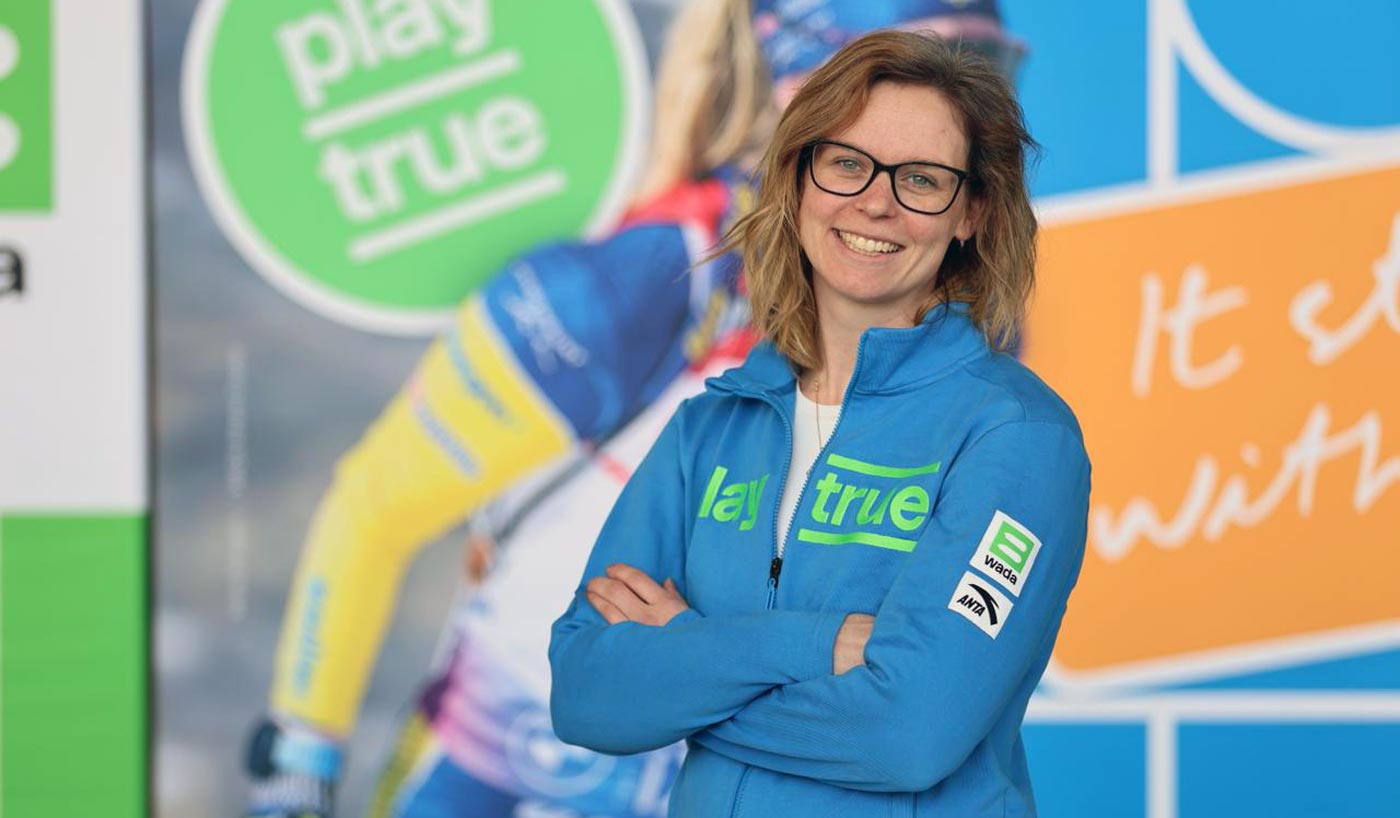
Elisabeth Maier is one of the most prominent figures in Canadian skeleton racing. A graduate of the Master in Sport Business Online, she shares how her experience at Johan Cruyff Institute helped her transition from sports to professional life
Throughout her athletic career, Elisabeth Maier achieved numerous successes, including three World Cup victories in skeleton and participation in the 2018 Winter Olympics in PyeongChang. However, her career ended abruptly in 2022: “When my career ended, it was sudden. I was in the best shape of my life, and then suddenly it was over. The impact on my mental health was very real,” she explains.
One of the keys to overcoming this transition from sport to professional life was education. The Master in Sport Business Online helped her prepare for the challenges of sports governance, a subject she is passionate about and currently works in. Elisabeth is part of the IBSF Executive Committee and the Athlete Council of the World Anti-Doping Agency. She also actively participates in the Athlete Rights and Responsibilities Charter Committee of the International Olympic Committee (IOC).
In this interview, Elisabeth recounts her experience of having to retire from sport and emphasizes the importance of education for athletes: “It’s important that they understand there is much more to life than sport. And I love sport. I loved my discipline, skeleton, when I was competing. And now, when I think about sports governance and serving athletes from that perspective, I get emotional, I get excited. And I didn’t think that was possible.”
How has your experience as an athlete influenced your current professional life?
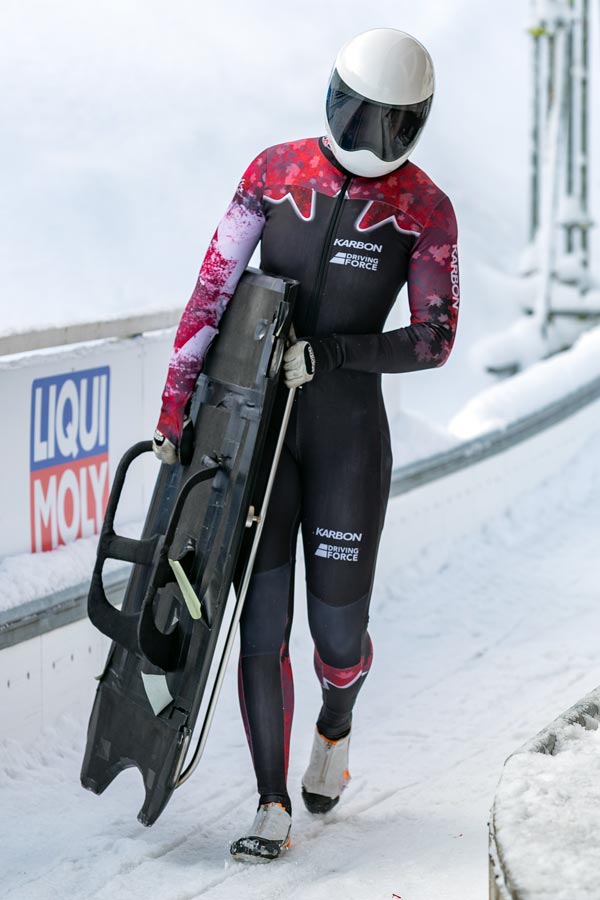
IBSF World Championships Bobsleigh and Skeleton Altenberg: Elisabeth Maier (CAN, Canada). Steffen Prößdorf, CC BY-SA 4.0, via Wikimedia Commons.
I think one of the key aspects of being a professional athlete for so long is that you develop internal motivation. You have to stay motivated by setting concrete goals. And that has allowed me to transfer that to my professional life, as well as being able to set clear goals and see progress, even when it’s not so obvious.
It has also helped me navigate high-pressure environments. For example, when we had to defend our thesis, it’s like practicing elite sports. It no longer causes me worry or anxiety. I have been through stressful situations before. I have performed under high pressure. So when I face uncomfortable or demanding environments, my body already knows how to function, even under those circumstances.
What challenges have you faced transitioning beyond sport, and how have you managed them?
I think this is a very relevant issue for most athletes because almost everyone “retires” from sport when their career ends. And I think that’s a misleading term, because retirement usually means you’re in your 60s or older and you’re going to relax. I prefer to talk about career transition.
I think that changes our mental perspective because saying “I retire” sounds definitive, and that sense of finality can be overwhelming for many athletes. Also, as an athlete, your days are highly structured; you know exactly what you have to do, everything is predictable. But once you take the next step, everything becomes much more uncertain. In my case, I also didn’t have previous studies. So when my career ended, it was sudden. It was a total surprise. I was in the best shape of my life and suddenly it was over. The impact on my mental health was very real. There is also the struggle to find your identity.
“This happens a lot to athletes because when we compete, we see the results, and part of our identity ends up tied to those results rather than being based on something more solid.”
So when your career ends, the big question appears: “Who am I without sport?” And that was something I faced as well. For me, I returned to my faith and followed that path. And now, years later, that is the foundation I rely on: who God says I am, not what my results said, because those kept changing. There are many factors involved, but the transition from sport to professional life can be very, very difficult.
It can be overwhelming, it can be scary, it can be very confusing because you feel like the ground has been pulled from under you. Even if you knew your career was about to end, it’s still hard.
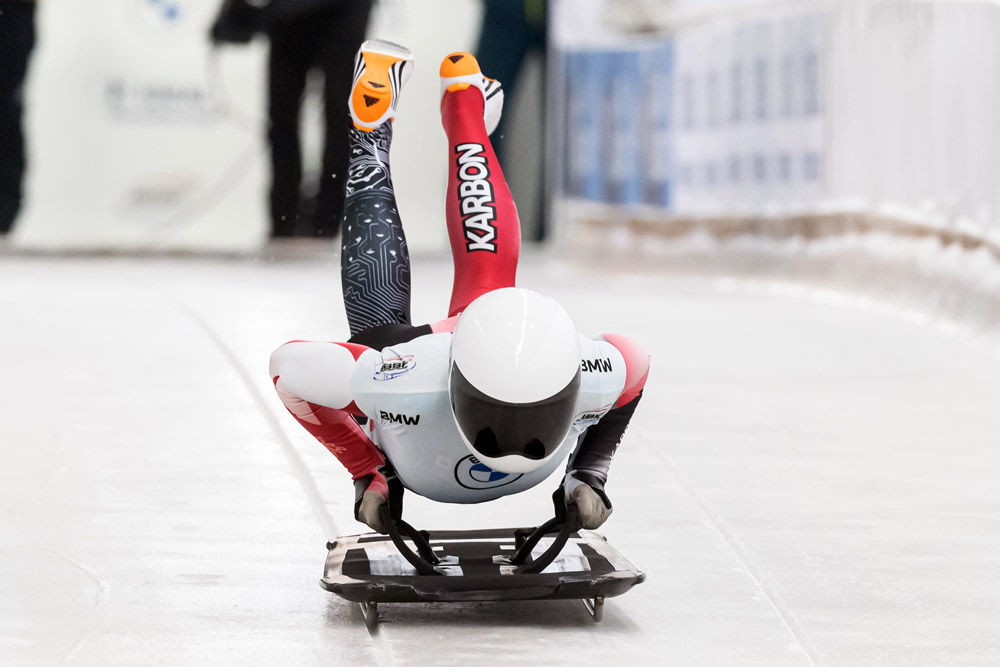
IBSF World Championships Bobsleigh and Skeleton Altenberg: Elisabeth Maier (CAN, Canada). Steffen Prößdorf, CC BY-SA 4.0, via Wikimedia Commons.
How did your studies at Johan Cruyff Institute help you during this process?
It expanded my experience a lot. I think the program is wonderful because it recognizes sporting experience as equivalent to a bachelor’s degree. I thought: “If I have to study again, I’ll have to do a degree, then a master’s…” and I was calculating the years, thinking: “I’ll finish my studies at 40 years old.”
So the fact that Johan Cruyff Institute recognized that experience and gave it value was fantastic. And what I’ve learned has been very good and deep. Also, the final project is very applicable to the sports world. I am very excited to collaborate with Johan Cruyff Institute to implement that project and create a positive impact in the sector. The Johan Cruyff Institute program has helped me find purpose, direction, and new goals.
Can you share how you applied what you learned in the master’s to a real project?
Yes, my final project focuses on sports governance, on good governance, which I am passionate about. If anyone wants to talk about it, I can go on for hours. I am part of the Executive Committee of the International Bobsleigh and Skeleton Federation, the Athlete Council of the World Anti-Doping Agency, and the Steering Committee of the IOC’s Athlete Rights and Responsibilities Charter. All of these are spaces related to governance.
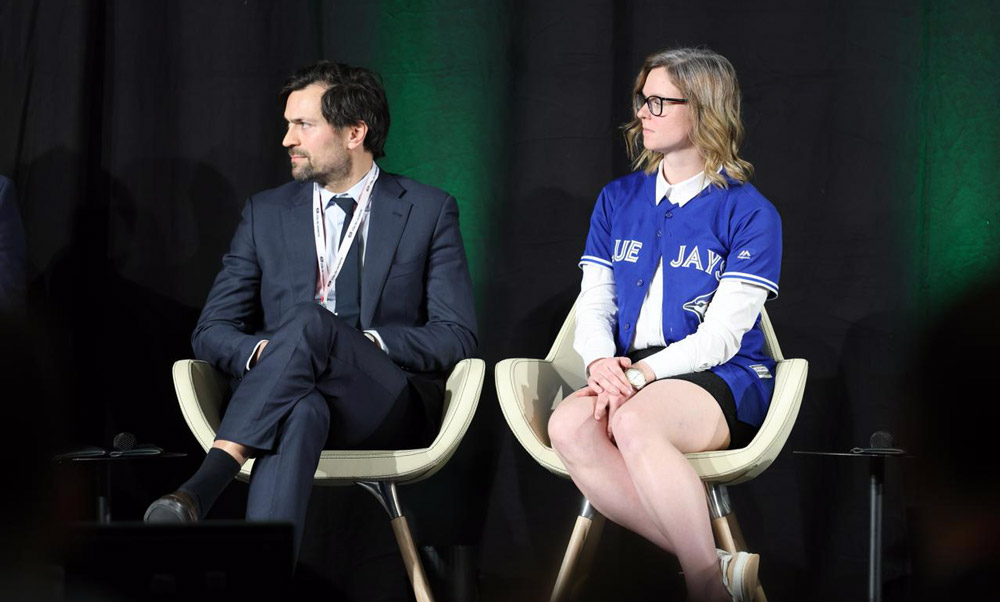
Elisabeth Maier, panelist at the WADA Symposium on Whistleblowers in Anti-Doping, sharing her sporting experience.
So it was great to be able to deepen this topic in my final project, using the experience I have gained in those organizations to analyze, for example, at IBSF where I’m on the Executive Committee, what can be improved in governance. Through that, I’m contributing to one of our strategic priorities, which is precisely good governance.
The project works a bit like a pilot test, a proof of concept, to see if it really yields results, and I believe it does. I truly believe that good governance is the foundation for sports organizations to serve athletes well and also to manage their resources properly. It impacts many areas. So it has been very applicable to the positions I currently hold.
What advice would you give to other athletes considering education to prepare for life after sport?
I would say do something besides sport while you are still competing. I didn’t do that, and that made the transition very abrupt and very hard. Balance is fundamental, even though when you’re immersed in an athlete’s life it’s hard to see the value. But becoming a complete, balanced person is much better than finishing your career as a sport robot.
“I have encouraged other athletes to do this master’s because I think it’s a fantastic program.”
And the flexibility it offers is very useful. But yes, balance is key in life, even if sometimes you think: “I want to get to the Olympics” or “I want to compete in the World Championship,” and you shut everything else out to focus only on that. And still, you might not make it.
It’s important for athletes to understand that there is much more to life than sport. And I love sport. I loved my discipline, skeleton, when I competed. But the incredible thing is that I didn’t think I could enjoy something as much as I enjoyed skeleton. And now, when I think about sports governance and serving athletes from that place, I get emotional, I get excited. And I didn’t think that was possible.
When you’re in the middle of your sports career, you have blinders on and only see your sport. But the reality is there is a huge world out there, with exciting things just around the corner.