Jorge Giordano is Director of National Teams at the AUF. In this interview with Johan Cruyff Institute, he looks back on his professional journey and outlines the preparations on the road to the 2026 FIFA World Cup
Over a 40-year career, Jorge Giordano has been a player, coach and sports executive in different football clubs. Now, as Director of National Teams at the Uruguayan Football Association (AUF), he brings together a lifetime of learning to provide structure and strategic vision to all of Uruguay’s national teams.
Jorge began his career as a professional footballer and moved into coaching after retiring from playing. Over the years, he has worked at numerous clubs in Uruguay and abroad, combining first-team management with responsibilities in youth development and talent development.
This interview with Johan Cruyff Institute was conducted in the context of the presentation of From the Book to the Pitch: Management and Coaching in Professional Football, a publication in which Jorge brings together his experience in the sport.
Throughout your career you have been a player, a coach and now an executive at the AUF. What did you learn from each stage and how do they connect in your current role?
Having gone through every stage, playing, coaching and now holding a management position, has given me a great deal of experience. Experiencing sport from the inside, in different roles, is a privilege and provides many tools. But that alone is not enough. Management positions must be supported by education that provides knowledge.
“If you don’t have the tools to manage and plan, experience alone is not enough. It would not be appropriate for someone without formal education to manage a sports organisation”.
Of course, my career has given me a great deal of experience, but it needs to be complemented with education.
How is the Uruguay national team preparing for the World Cup?
Right now, we are focused on the next FIFA international window, with a friendly match against England at Wembley Stadium and a second match yet to be confirmed. These are interesting fixtures because they allow us to assess precisely the current level and condition of the players.
After the friendlies, it has been decided that the main preparation phase will take place in Uruguay, where we will play two farewell matches before the World Cup. The core of the team’s preparation will be carried out in Uruguay. That gives us great confidence.
In your book you connect theory, methodology and practice. Which ideas from the book do you apply in your work with the national teams?
There are many ideas from the book that I apply in my current role.
“My position has three fundamental pillars: methodology, infrastructure and human resource development”.
The book includes chapters dedicated to each of these areas. Readers can find tools that I consider relevant for starting to develop their own professional role.
This book is the result of my education and my reflections on the sports industry. It includes many personal insights that I believe can contribute to professional development.
What would you like a reader working in management or education to take away from the book?
I believe it is the responsibility of all managers to have the ability to organise a sports structure. They must also know how to monitor it, evaluate it and take it to the next level. That is why I consider education so important for professionals working in the sports industry.
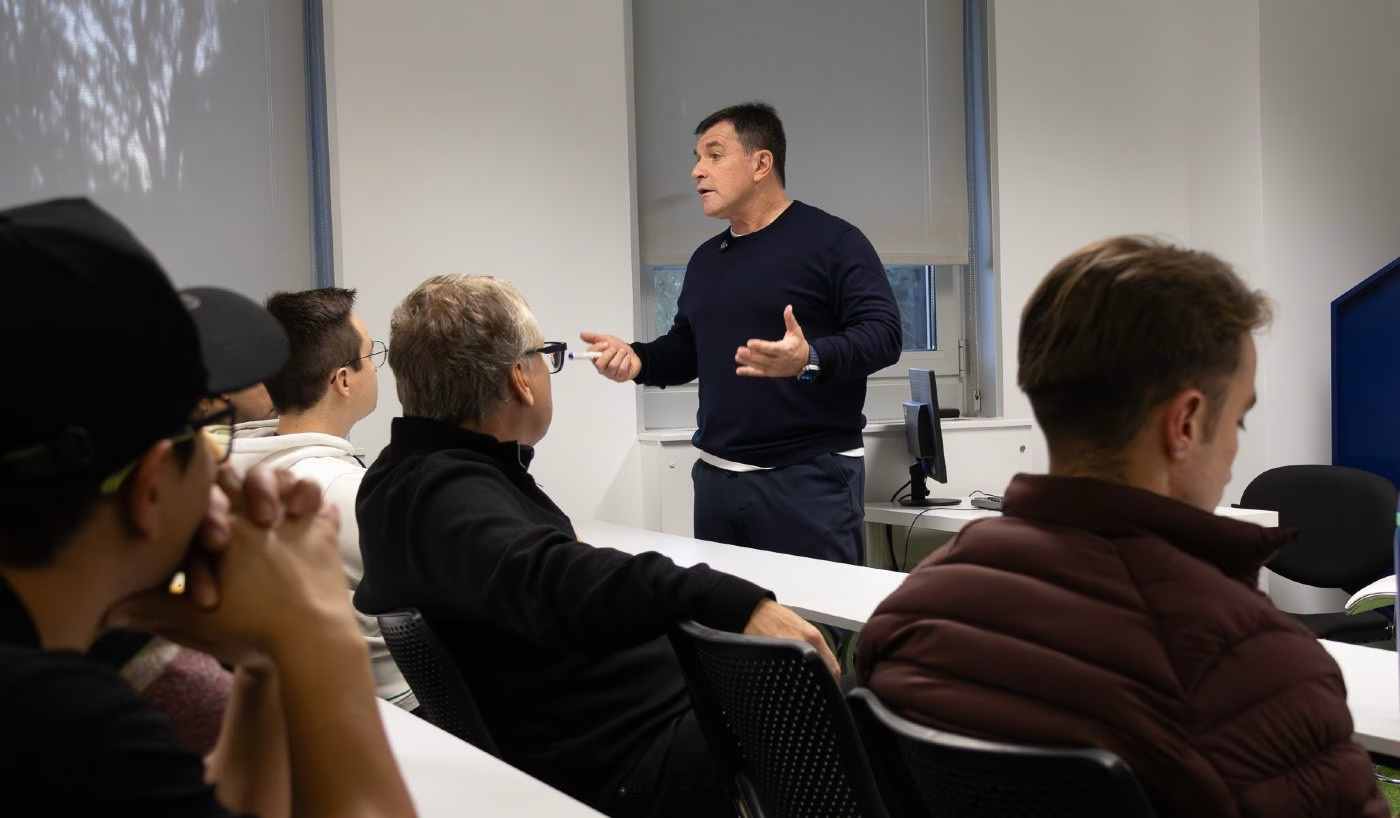
Jorge Giordano, in a presentation with students and alumni of Johan Cruyff Institute as part of the Sports Stories talks.
What skills should someone develop today if they want to work within the structure of football, and not only in the sporting side?
First of all, they need to clearly define with the organisation the scope of their role and fully understand what is expected of them. It is important to have a precise diagnosis of what is required in a given position, because that will be the benchmark used to measure success.
It is also essential to maintain order within the organisation and ensure that things are done properly. I believe there is always time to do extraordinary things, but what must always be done is to preserve the organisation’s structure and proper functioning.
“Education is fundamental. In Europe, sports management has grown significantly and has become a global benchmark in this field”.
In your experience, what carries more weight in sports management: academic education or practical experience?
It is an interesting question, because I believe both are relevant. Someone who has not competed in sport can certainly become a manager. It is true that they may lack the direct lived experience of sport, which is very valuable. That is why it is important to understand what the organisation is looking for in each professional.
In the case of professionals who were not athletes, their contribution on the strictly sporting side may be more limited, but in management they can add tremendous value. Football is one sport, and management is another sport. That is why I believe sporting experience alone is not enough.
“In my case, when I began studying, I started to understand what each department within an organisation does, as well as its internal dynamics and relationships”.
Without education, it is very difficult to remain competitive in the market. The demands and expectations in today’s sports industry are extremely high, and it is hard to meet them without proper preparation.