Olympic swimmer Stan Pijnenburg combines elite sport, education, and social impact through his work at BrabantSport and the Master in Sport Business Online at Johan Cruyff Institute. He believes the true power of sport lies not in medals, but in its ability to inspire and create positive change
As an Olympic swimmer, Stan Pijnenburg knows what it means to push yourself to the limit. But it’s the power of sport and the impact it can make beyond the pool that truly excites him. At BrabantSport, he draws on his elite athletic experience to drive social change. At the same time, he continues to learn and grow through the Master in Sport Business Online at Johan Cruyff Institute —supported by a Telesport scholarship— exploring new areas like strategic thinking and leadership. Stan is living proof that sport, education, and work can strengthen one another, and that growth happens when you keep challenging yourself.
You’ve competed at the highest level and are now pursuing a master’s degree. How has that combination changed the way you view the sports industry?
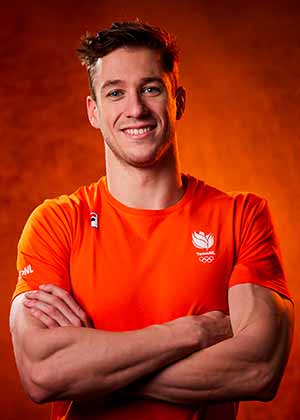
Stan Pijnenburg.
It’s helped me take a more critical and strategic look at the sector. When I first started, I was just happy to be part of the elite level. But the longer you’re involved, the more you start to see what could be improved. In the Netherlands, for example, elite swim training centers are very centralized. In the UK, the model is different—elite sports are tied into universities, with built-in funding and academic opportunities. That leads to greater distribution, more programs, more coaches, and more chances for talent to develop.
I’ve been fortunate to pursue a broader path by combining elite swimming with a bachelor’s degree at Johan Cruyff Academy. Some people say you have to give up everything for your sport, but I only partly agree.
“You definitely have to live the life of a top athlete, but doing something alongside your sport—like studying—can create balance, depth, and often even enhance performance.”
How did that period, balancing sport and education, shape you?
Even though you’re alone on the starting block as a swimmer, you never achieve results alone. Coaches, trainers, fellow students, and family all help move you forward. One of the biggest lessons I’ve learned: ask for help in time! Reaching out isn’t weakness—it’s strength. I apply that now too, in both my job and my studies. I’m just at the beginning of my professional career, which makes it all the more important to keep learning, to ask questions, and to stay open to the knowledge and experiences of others. The goal is always the same: to get better together.
What do you find most valuable in the Master in Sport Business Online at Johan Cruyff Institute?
The international setting is a huge plus. I’ve worked on projects with students from places like Luxembourg, Spain, and Canada. You get to see how sport is structured in different countries, which really broadens your view.
“I study the master program in English and although it took me a bit of adjustment, it’s helping me develop the professional language I need to work in global sports.”
I’m learning a lot and can focus on topics that interest me personally —leadership, people management, sport tourism (which was new to me), and sponsorship strategy, which ties directly into my work at BrabantSport. The flexibility of online learning also suits me well. As an elite athlete, I was used to learning online and managing my own schedule. That now helps me balance study, work, and personal life. And just like at Johan Cruyff Academy, the support is excellent: if you have a question, you get a quick answer, so you never feel like you’re on your own.
Your LinkedIn profile says: “The power of sport goes beyond performance.” What do you mean by that?
I recently joined a webinar with speed skater Erben Wennemars. He asked, “Who knows what I’ve won?” No one really knew. Some even thought he was an Olympic champion—which he wasn’t. His point was powerful: in the end, people don’t remember the exact results, but the impact an athlete makes. That’s the real power of sport—the ability to inspire and to motivate people to take action.
I’m incredibly grateful for everything sport has given me—not just achievements, but the life experiences and lessons. Now, I try to pass that on. At BrabantSport, for example, we use sport to make a difference. We support 8–10 major events each year, all tied to social goals—like getting kids active, fighting loneliness, or making sport more accessible. My role is to involve the business community. The more companies we get on board, the greater our impact. And in return, they become part of a sports-minded network that helps build a healthier, more active society.
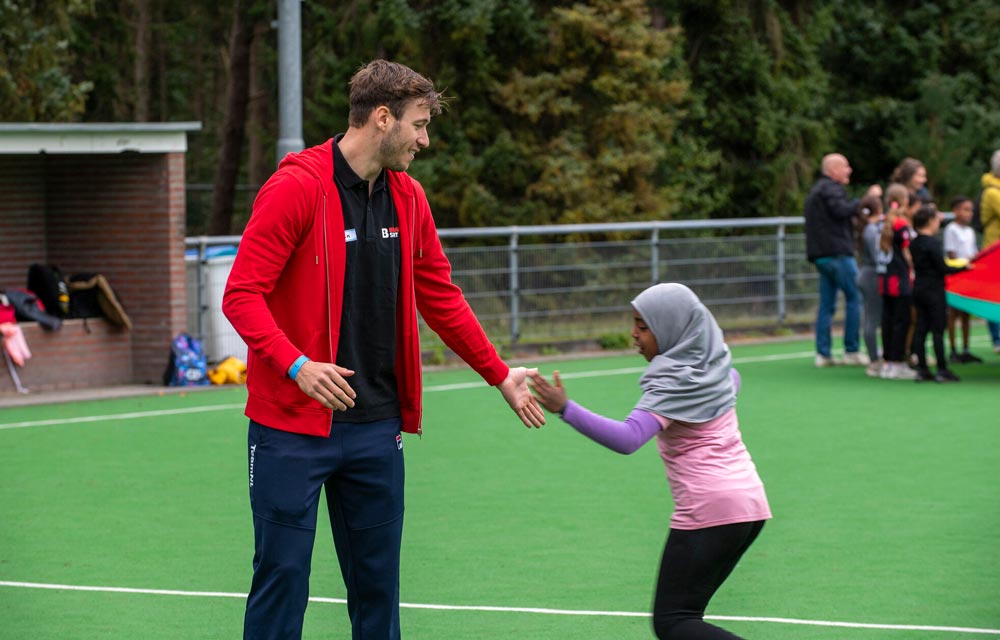
Stan Pijnenburg: “We use sport to make a difference, we support events that get kids active or make sport accessible”.
Johan Cruyff said, “Who better to serve the best interests of sport than someone who has the heart of an athlete?”. Do you agree?
Absolutely. For me, it’s all about practicing what you preach. As a former elite athlete, I know what it takes to perform. I understand the culture, the pressure, the dynamics. Now that I work in the sports world, that gives my actions added credibility—and it helps me shape policy in meaningful ways. Look at the Chef de Mission for TeamNL—they’re always former athletes who use their experience to serve the greater good. That’s what drives me too. I feel I can add the most value in a world I know inside and out— and where my passion lies.
How’s the dynamic in your master’s program between athletes and non-athletes?
Not everyone is a former elite athlete, but we all share a deep passion for sport—and that creates a strong connection. Some students come from completely different industries and want to learn about the sports world because they see how much it has to offer. That kind of exchange is incredibly valuable. It’s the same at BrabantSport. Our network includes more than 100 companies from outside the sports industry—but all of them have a love for sport.
“The more people who engage in the sports sector with that passion for sport, the more we can achieve.”
You worked on educational kits to promote sports in primary schools. Do you see yourself as an ambassador for children’s sports?
When I first discovered swimming as a kid, it gave me this amazing sense of freedom, fun, and confidence. I want every child to have that experience. Working on educational modules for primary schools was a great way to bring sport into the classroom through athletes’ stories—not to teach rules, but to inspire, to show what sport can do for you. The idea is simple: we hope kids go home and say, “Mom, I want to try that too!” That’s where it all begins.
Finally, what advice would you give athletes who also want to study?
It is possible to study alongside your sport, and it’s worth it. Look for a program with teachers who understand sport and are willing to give you space for your athletic commitments—like at Johan Cruyff Academy or Johan Cruyff Institute. But you also have to take charge yourself. Speak up if you’re struggling. An academic program keeps moving forward, and if you fall behind for a few weeks, it can be hard to catch up. Stay in touch with your professors and advisors about your progress and plan your study time well. You don’t have to do it alone—but you do have to do it yourself.
Credits cover photo: Bart Koek.