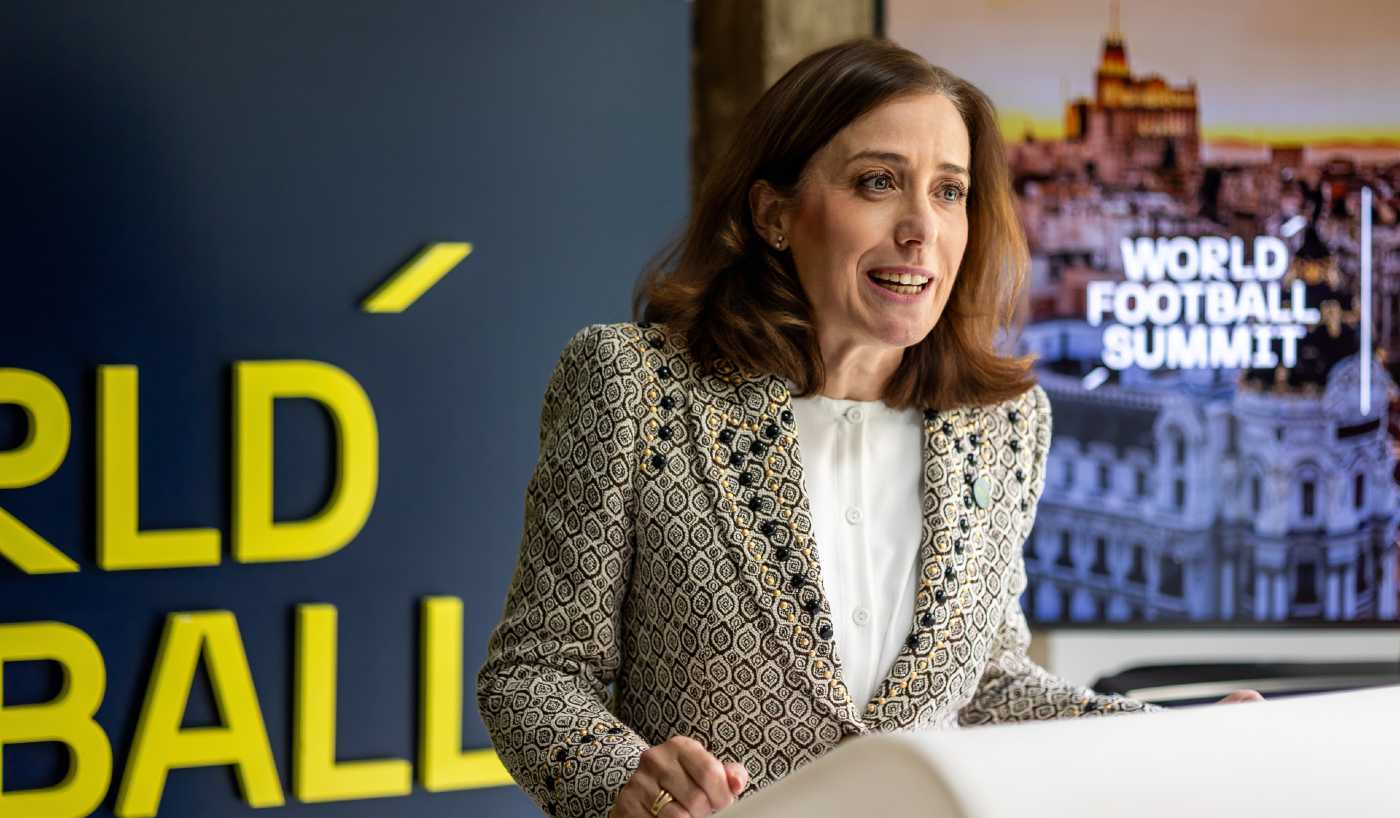
Marian Otamendi is the CEO and co-founder of World Football Summit, the leading meeting point for the global football industry, bringing together all key stakeholders across the sector at its events.
With a professional career that extends beyond the sports industry, Marian Otamendi leads the operations of World Football Summit. Since its launch in 2016, WFS has established itself as a global platform where football leaders connect, share knowledge, and drive the growth of the industry.
Gender equality is one of WFS’s strategic priorities, with initiatives designed to promote the development and visibility of women in an industry historically dominated by men. One of these initiatives is carried out in partnership with Johan Cruyff Institute: a scholarship programme aimed at supporting the education and professional development of future women leaders in sport. This year’s edition, which offers six scholarships, renews both organisations’ commitment to advancing gender equality.
In this interview, Marian discusses the key factors behind World Football Summit’s growth, reflects on the role of women in the football industry, and explains why collaboration and the shared values between World Football Summit and Johan Cruyff Institute are essential to driving meaningful and lasting change.
World Football Summit was founded more than a decade ago. How has the football industry evolved since the first edition, and what changes have surprised you the most?
World Football Summit was founded 10 years ago, in 2016. I would say we were in the right place at the right time. That was when the football industry was beginning to accelerate its professionalization, while at the same time LALIGA was entering a period of rapid international expansion.
Since then, the industry has grown tremendously. It has become stronger, created more jobs, clubs are generating more revenue, and the business ecosystem around football has expanded significantly. We’ve also witnessed the rapid emergence of technology, which has been transformative and disruptive in many ways. Finally, we’ve seen a growing presence of women across the industry.
At our first World Football Summit, women represented around 16% of attendees. Today, that figure averages about 24%, which reflects the broader evolution of the industry.
“Women are already part of the industry. The challenge now is moving from middle management into executive leadership positions. Even so, the progress we’ve seen over these ten years has been very encouraging”.
Before founding World Football Summit, you worked on projects in industries far removed from sports. What lessons from that experience have been most valuable in leading this project today?

Marian Otamendi is the CEO and co-founder of World Football Summit.
That’s true. Both my co-founder, Jan Alessie, and I came into the sports industry from outside it, and we had each led different entrepreneurial ventures before launching World Football Summit.
In my case, that previous experience gave me a very clear vision of how things should be done. I already had a strong professional background from helping companies participate in international trade fairs, supporting business acceleration, and developing international markets. Because of that, I knew exactly what I wanted World Football Summit to become.
Most importantly, I knew how to execute the idea: how to build it, who to contact, and what steps needed to be taken.
That has been one of the keys to our success, together with something I believe is becoming increasingly rare today: hard work. We were in the right place at the right time, and we knew how to execute our vision, but above all, we work incredibly hard every single day. In my experience, it’s very difficult to fail if you’re willing to put in that level of consistent effort.
Why do you believe the growing participation of women in the sports industry is so important?
Since the 1970s, academic research and management studies have consistently shown that diverse teams perform better.
I believe it’s an anomaly that leadership in the football industry continues to be dominated by men with similar backgrounds and ways of thinking. When everyone around the table shares the same perspective, they’re likely to reach the same conclusions. Yet today’s world demands creativity, adaptability, and the ability to find new solutions quickly. Without diversity, those qualities are much harder to achieve.
“Women bring fresh and highly valuable perspectives to the football industry. Beyond diversity itself, we contribute empathy and help accelerate growth”.
This isn’t simply about feminism; it’s something that has been extensively supported by academic research.
Women also tend to be more collaborative, and that’s something the football industry needs. Too often, it’s driven by strong egos and highly centralized leadership styles.
Sometimes I wonder who is really thinking about football itself, because it often feels as though stakeholders are primarily focused on their own interests, whether that’s a competition, a tournament, or a particular format. But there’s a greater responsibility: protecting football itself. That’s something we all need to work on together, and women can make a significant contribution.
Speaking of the partnership between World Football Summit and Johan Cruyff Institute, what value do you think both organizations bring to one another?
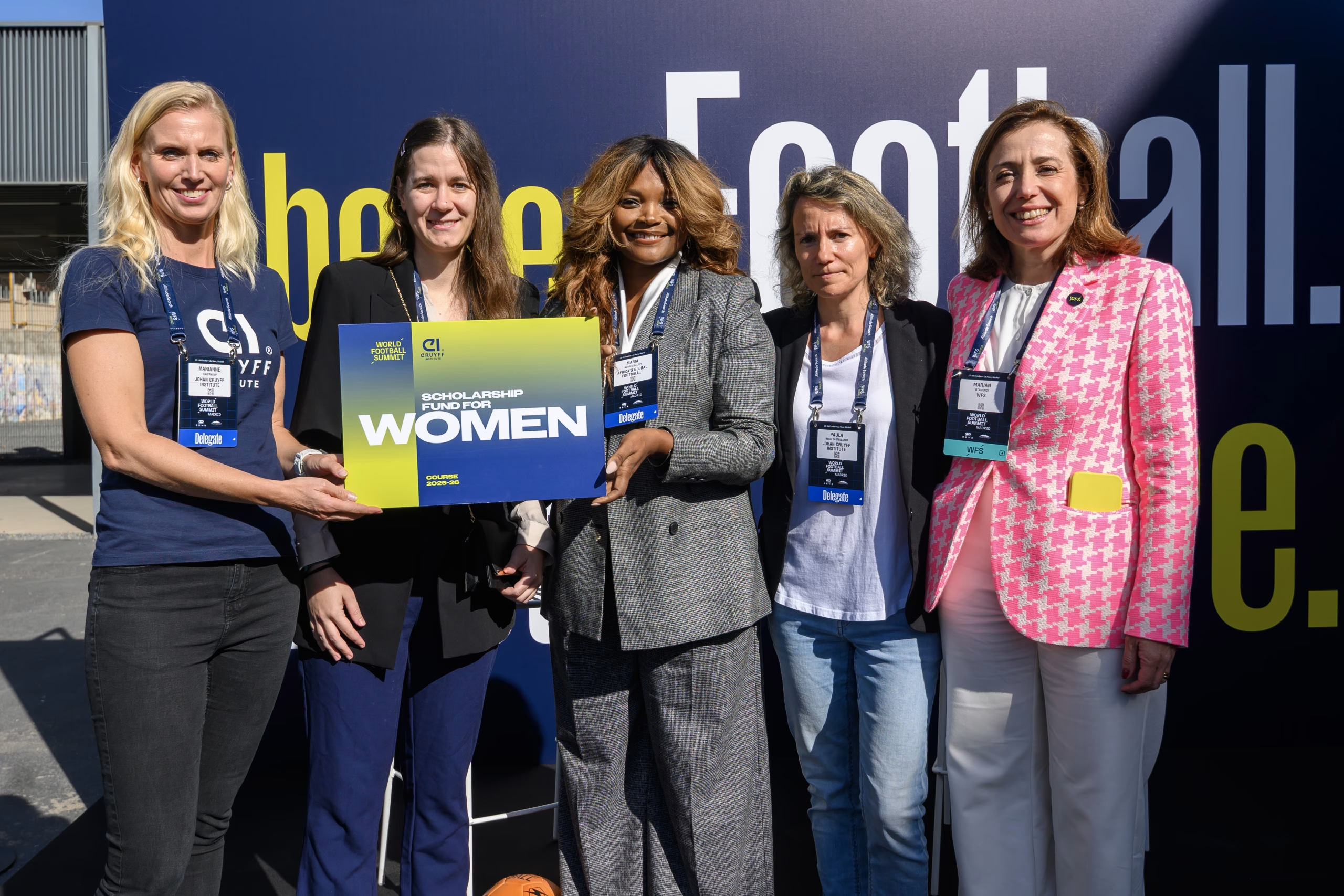
Marian Otamendi at the scholarship award ceremony for the 2025 edition of the program, together with Marianne Haverkamp, Commercial Agent of the Johan Cruyff Institute.
Johan Cruyff Institute was one of the organizations that supported us from the very beginning. That was evident back in 2016, when they joined us for our very first edition. At the time, many people didn’t see the value of what we were building or simply didn’t believe in us.
“Johan Cruyff Institute was forward-thinking and willing to try something new, and I believe that mindset has contributed to both organizations’ growth over the years”.
Since then, we’ve grown side by side. I think we’re highly complementary because football needs greater professionalization, and the academic programs of Johan Cruyff Institute help improve the qualifications of professionals already working, or aspiring to work, in the industry.
Another important point of connection is that both organizations operate internationally. We’re accustomed to working across different markets and navigating diverse cultural environments, which is one of the reasons we’ve always worked so well together.
A new edition of the scholarship program aimed at supporting women’s academic and professional development has recently been launched. What is its main objective?
The scholarship program is a clear sign that Johan Cruyff Institute is genuinely committed to improving the sports industry. I truly value the work you’re doing to promote greater inclusion of women because it’s something the industry clearly needs.
At the same time, women have to invest in their own education. Without the right qualifications, it’s difficult to expect greater representation in leadership positions. That’s where the idea for the scholarships came from. We were discussing ways to accelerate inclusion, and Johan Cruyff Institute responded by making scholarship opportunities available for women who want to build careers in the sports industry.
This initiative shows that Johan Cruyff Institute doesn’t just talk about inclusion—it supports it through concrete actions. In sports, as in many other sectors, there’s often a lot of lip service.
“The women who have benefited from these scholarships are outstanding professionals, and many are making remarkable progress in their careers”.
That’s proof that this partnership works. World Football Summit helps amplify the visibility of Johan Cruyff Institute’s scholarships, and I believe it’s a project both organizations can be genuinely proud of.
What advice would you give to someone who is taking their first steps and wants to build a network within the football industry?
I’d offer a few practical pieces of advice that can be applied immediately.
“First and foremost, education is essential. Building a strong foundation through learning should always be the starting point”.
It’s also important to stay informed about what’s happening across the industry. That means following specialized media outlets such as Palco23 and 2Playbook. They provide valuable insights into market trends, emerging opportunities, and job openings.
And, of course, attend events like World Football Summit. These events not only deepen your understanding of the industry but also allow you to meet professionals, interact with them, and build meaningful relationships.
Finally, I’d encourage people to persevere. Breaking into the sports industry isn’t always easy, but if that’s your goal, you have to keep finding ways to move forward. One example that may sound obvious—but often isn’t—is preparing thoroughly for job interviews. Too many candidates show up without even knowing the company they’ve applied to, and that makes a very poor impression.
Rome wasn’t built in a day. Keep trying, stay committed, and never underestimate the value of hard work. If you’re willing to put in the effort consistently, you’ll eventually achieve your goals.