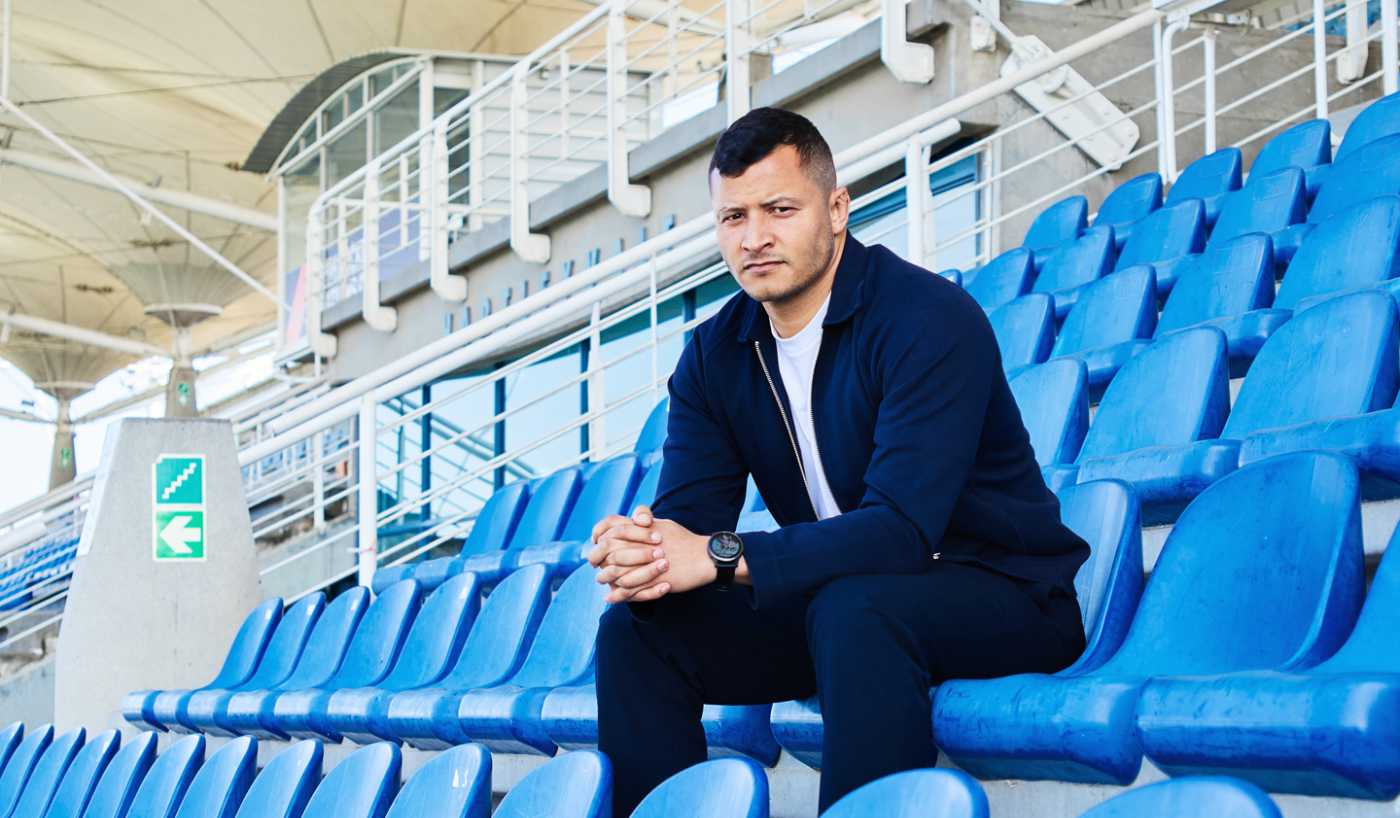
A graduate of the Master in Football Business Online at Johan Cruyff Institute, Keegan Wasserfall is the CEO of Cape Town City FC, one of the leading clubs in Cape Town, currently competing in South Africa’s National First Division.
The impressive performances of national teams such as Morocco, Egypt, and Côte d’Ivoire at the 2026 FIFA World Cup have once again highlighted the remarkable growth of African football and the continent’s enormous potential to compete at the highest level.
For Keegan Wasserfall, education is one of the key drivers behind that progress. Before taking over the leadership of Cape Town City FC, he built an extensive career as a football agent and worked in commercial strategy and brand development, giving him firsthand insight into how the football industry operates across Africa.
Alongside his role at the club, he also serves as Johan Cruyff Institute‘s representative in Africa, fostering partnerships across the continent to expand access to sports education and contribute to the professionalization of football management.
In this interview, Wasserfall reflects on his academic journey through the Master in Football Business Online, discusses the challenges and opportunities facing African football, and shares his vision for the future of the sport across the continent.
You have worked as a football agent, entrepreneur, and club executive. Which experience has had the greatest impact on your career?
That’s a difficult question because my career has been shaped above all by the years I spent running my own player agency. Without a doubt, that experience has had the biggest influence on my professional journey.
For around thirteen years, I worked as a football agent based in South Africa, managing player transfers to clubs in different countries. That period not only shaped my career but also transformed the way I understand the football industry.
In addition to representing players, we were also involved in commercial projects. Earning my agent’s license and developing an in-depth understanding of the regulations gave me a broad perspective on how professional football operates.
That experience was instrumental in getting me to where I am today. More importantly, it sparked my desire to gain a deeper understanding of the industry and continue developing professionally.
“I’ve always been curious about understanding sport from a broader perspective. That’s what led me to Johan Cruyff Institute.”
I first completed several short programs, then the Postgraduate Diploma in Football Business Online, and eventually the Master in Football Business Online, with the goal of expanding my knowledge of the football industry as a whole.
You were recently appointed CEO of Cape Town City FC. What are your main objectives for the club, and what is your long-term vision?
We’re entering a very special season as the club celebrates its tenth anniversary. Shortly before I joined to lead the commercial department, the team was relegated. It was an unusual campaign for a club that had consistently finished among the top six in a sixteen-team league. Along the way, however, the club lost part of its identity and structure, shifted its focus toward increased spending on player signings, and ultimately suffered relegation.
Last season was our first in the National First Division, and we came very close to earning promotion. We finished second in the league and reached the promotion playoffs, but unfortunately we fell just short of achieving our goal.
Now our objective is crystal clear: we want to return to the top flight. That is our absolute priority because the success of every other project we have planned depends on it. Every resource and every effort is focused on achieving promotion.
Beyond that, our vision is to re-establish ourselves as a competitive club that plays attractive, attacking football, because that has always been Cape Town City FC’s identity. At the same time, we want to continue creating opportunities for young talent, developing players, and providing them with a pathway to the professional game.
To achieve that, improving our facilities will be essential. One of our major projects is to build our own 6,000-seat stadium. We would become one of the first clubs in South Africa to own its own stadium, allowing us to deliver a completely different matchday experience while continuing to strengthen a brand that is dynamic, accessible, and appealing.
What are the biggest opportunities for the growth of African football today?

Keegan Wasserfall, CEO of Cape Town City FC.
Africa has already shown that it can compete at the highest level. We’ve seen it again at the World Cup, with national teams like Morocco and Côte d’Ivoire delivering outstanding performances.
Over the years, we’ve seen many African players succeed at some of the world’s biggest clubs and establish themselves as global stars, but they are still isolated success stories.
When you look at the countries achieving the strongest results, you see that each of them has a clear long-term project behind its success: a strategy led by the national federation, investment in infrastructure, and a solid commitment to youth development.
“The biggest challenge for African football remains development”.
If the rest of the continent follows that path while taking advantage of FIFA’s support and the development programs available to national associations, African football can make a significant leap forward. We need to strengthen youth football, improve coach education, and have the patience to develop players over the next five to ten years.
We also need to professionalize leagues across the continent, not only in countries such as South Africa, Morocco, and Egypt. We need well-organized competitions led by professionals with expertise in both sports management and the business side of sport. Only then will we see widespread progress across African football and an increasingly competitive CAF Champions League.
What skills do future African sports leaders need to succeed?
I believe sports management across Africa still has considerable room for improvement. And this isn’t just true in football, it applies to much of the sports industry. Of course, the situation varies from one country to another, but it’s a common challenge across much of the continent.
That’s why I’ve worked very closely with Johan Cruyff Institute to expand access to education. It hasn’t been an easy journey because there are always obstacles, but I’m convinced that education is where everything begins.
Just as coaches must earn a UEFA Pro License or a CAF A License to work in professional football, I believe there should also be minimum educational requirements for those who manage football clubs.
I’m not referring only to studying at Johan Cruyff Institute. I believe both FIFA and CAF should promote dedicated programs to improve the qualifications of professionals working in sport management.
We need people who are well trained in essential areas such as the FIFA Transfer Matching System (TMS), player registration, transfer regulations, sporting regulations, and club administration. Those are some of the biggest gaps in African football today.
“If we can implement accessible educational programs and establish minimum professional standards for clubs, we’ll begin developing the talent needed to grow the industry and take a decisive step toward its professionalization”.
How did your studies at Johan Cruyff Institute influence your professional career?
When I look back, I realize I was on a completely different career path.
At the time, I was working as a football agent. I had my license and a thorough understanding of the regulations, that was my area of expertise. But I had always been curious about how clubs and football associations operate behind the scenes.
That curiosity is exactly what led me to study at Johan Cruyff Institute. As I progressed through the program and analyzed case studies on club management, commercial strategy, the transfer market, and the football business as a whole, I discovered an entirely new side of the industry.
Gradually, I moved away from player representation and became increasingly interested in working within a club or a sports organization because I realized the kind of impact I could make in that environment.
For me, education is essential if we want to improve sport in Africa.
“Johan Cruyff Institute played a pivotal role in that journey by providing me with knowledge that I now apply every day, not only in my role as CEO, but also in the commercial positions I held earlier in my career”.
Thanks to that education, I learned to identify business opportunities that I had previously overlooked simply because I had gained a much deeper understanding of how the global football ecosystem works.
As an African, I’m also aware that Europe is ahead in many areas of the football industry. Having the opportunity to learn how European clubs operate and to study their management models has been an incredibly valuable experience.
On top of that, I already had an international network of contacts from my years as a football agent. Combining that experience with everything I learned at Johan Cruyff Institute has enabled me to bring fresh ideas and new perspectives to my day-to-day work.
What is your vision for African football over the next decade?
My hope is that, ten years from now, we’ll see more African national teams competing at the highest level, not only Morocco, Côte d’Ivoire, and Egypt. I’d also like to see Nigeria return as one of the world’s leading football nations after missing out on the last World Cup, and for South Africa to continue developing into a consistently competitive team.
The real challenge, however, is making that progress sustainable. If we do everything we’ve discussed, improving management, strengthening youth development, making a firm commitment to player development, and working with a long-term strategy, we’ll be in a position to compete for the biggest titles.
I’m not going to claim that Africa will dominate world football, but I do believe the continent can compete on equal terms with the world’s best national teams, from the youth levels all the way to the senior team. We can challenge for a place among the world’s top four, compete for Olympic medals, and fight for major international honors.
“Africa has already shown that it has the talent to achieve those goals. The challenge now is to turn isolated successes into sustained excellence”.
To make that happen, however, we first need to address what I believe is the foundation of everything: football management and administration.
Looking back, what is the greatest lesson football has taught you?
That’s a fascinating question because no two days in football are ever the same. Every day brings new challenges, new decisions, and new situations to deal with.
One of the most important lessons I’ve learned is that everyone experiences and understands football differently. No matter how hard you try, you’ll never make everyone happy.
That’s why I believe it’s essential to stay true to your values. When a club has a clear identity and well-defined principles, every decision it makes, both on and off the pitch, should reflect them.
I’ve also learned the importance of resilience. I often say that football can give you some of the happiest moments of your life, but it can also bring your greatest disappointments. You may experience relegation, lose a final, or go through extremely difficult periods. The beauty of this sport is that it always gives you another chance to get back up and try again.
When I think about everything football has given me and the incredible people I’ve had the privilege of working with throughout my career, I realize it’s an extraordinary industry because it connects people from every corner of the world and from every background. You can watch children playing on a dirt field and, a few hours later, walk into a packed stadium to experience football at the highest level. In the end, they all share the same passion. Football has a unique ability to bring people together.
“I’m convinced football is a powerful driver of social change. And that’s precisely why we must continue investing not only in the game itself, but also in people, education, and professional development. That’s where real change begins.”