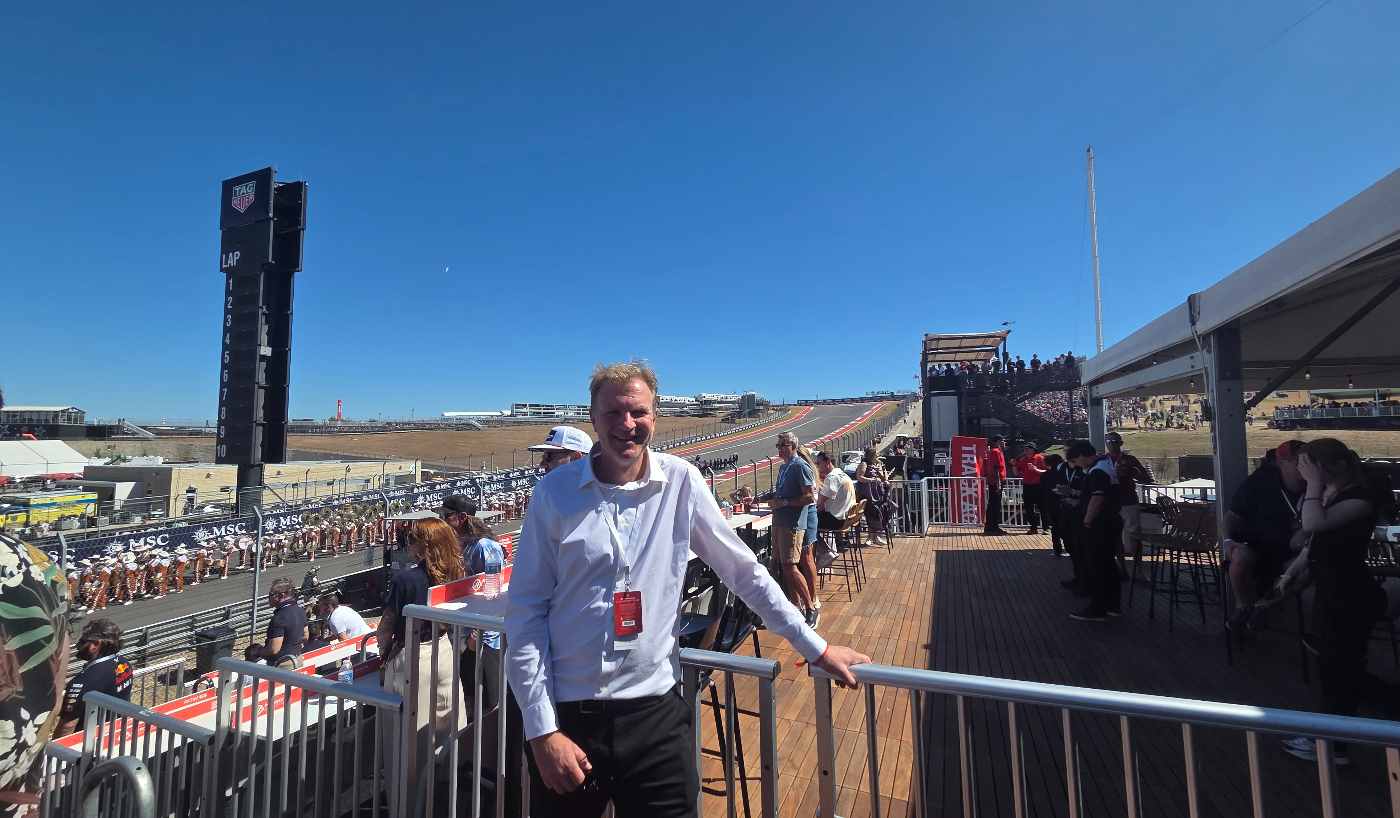
Faculty member at Johan Cruyff Academy, Eelco Groen boasts more than 25 years of experience in the sports industry. He has been directly involved in delivering some of the world’s premier sporting events, including Formula 1 and the UEFA EURO.
Throughout his professional career, Eelco Groen has built extensive expertise in international sports event management by integrating strategic planning, operations, and fan experience. He currently serves as Event Manager for the Formula 1 Heineken Dutch Grand Prix, and his track record includes high profile sporting events such as the European Football Championship and the World Gymnaestrada.
Alongside his industry work, Eelco shares his knowledge with the next generation of sports professionals as an instructor at the Johan Cruyff Academy. In the classroom, he bridges theory with practice, offering students valuable insights gained over two decades working on some of the largest international sporting stages.
In this interview, Eelco reflects on the evolution of sports event management, the critical importance of creating memorable fan experiences, and the essential skill sets future professionals need to thrive in a constantly transforming industry.
You have spent over 25 years working in the sports industry. What is the greatest lesson you have learned throughout your career?
There are several, but two stand out above the rest.
The first is closely tied to Johan Cruyff’s philosophy on sports: teamwork makes dreams happen.
Cruyff used to say that nobody accomplishes anything alone, everything is achieved by working together. That is why it is essential to trust the people around you and make everyone feel valued.
Just yesterday, I read a quote along those same lines: you never know who might help you during an event, in a stadium, or in any given situation.
Let me give you a very simple example. When I work in Formula 1, it is relatively common for operational issues to crop up, like a set of restrooms backing up or flooding. At that moment, I rely entirely on the janitorial staff to solve the problem. It would make no sense to treat them dismissively simply because of the nature of their job. On the contrary, you must treat them with respect, check in on them, and even offer them a bottle of water on a hot day.
Because on the day you need their help and they know who you are, they will likely do everything possible to resolve your issue right away. At the end of the day, we are all working toward the same objective.
That is why I believe that even if a hierarchy exists within an organization, every single person must feel equally important. You have to let them know and demonstrate to them that their work genuinely makes a difference.
The second major lesson is something featured right on my website: details are everything.
“The overarching master plan for a tournament is usually locked in well before the event begins. Ninety-nine percent of things happen exactly as planned. The real challenge lies in knowing how to react when that remaining one percent deviates from the plan.”
I recall a situation during the UEFA European Championship, during a match between Spain and Albania. We had established five stadium entry points, and Albanian supporters were designated to enter through Gate A because their seating bowl was located in that sector. That day, there was a organized fan march featuring 7,000 to 8,000 Albanian supporters.
At one point, the local police force grew anxious and decided,without consulting us,to divert part of the fan march toward Gate B. We were monitoring the entire situation live via closed circuit television (CCTV) and immediately saw that it wasn’t going to work. Gate B was even smaller than Gate A.
As the person responsible for overall access operations, I had to react immediately. We decided to redirect those fans toward Gate C.
However, that decision created a secondary issue: they were merging with a different crowd flow, so we had to alert security personnel right away. Furthermore, that entry point was also utilized by hospitality guests, requiring seamless coordination with that team to keep the flows separated and prevent any incidents.
All of that unfolded simply because law enforcement made a unilateral decision without prior coordination.
That kind of scenario proves that in event management, everything hinges on minor details. In major sports event management, you have to be able to adapt in seconds. When you respond effectively and manage those details properly, the entire event runs much smoother.
You balance teaching at the Johan Cruyff Academy with directing major international sports events. How do these two roles complement each other?

Eelco Groen currently serves as Event Manager for the Formula 1 Heineken Dutch Grand Prix.
I think the connection between the two is very clear. At Johan Cruyff Academy, I teach sports marketing, primarily within the Value Creation in Sports minor, where we show students how sports can generate value from various perspectives, commercial, organizational, and event based, among others.
The best part of remaining active in the field is that I can bring real world experience directly into the classroom. I don’t just teach theory; I share situations I have personally navigated.
This leads to engaging classroom discussions, allows us to analyze real case studies, and provides students with an insider’s view of what happens behind the scenes at major sporting events.
It also makes lectures much more dynamic and keeps students far more engaged.
Years ago, I used to teach primarily using textbook materials and PowerPoint slides, explaining concepts and illustrating them with a few basic examples. Now, I can deliver a far more interactive learning experience.
“During events, I frequently record footage and capture photos of operational situations to use in class later. I show them real life scenarios, behind the scenes footage, and actual examples of complex issues we had to solve during international competitions.”
It is a highly effective way to connect them with industry reality and help them understand how major sports event management actually works.
What skill sets do you consider most essential for young professionals looking to break into the sports industry?
I don’t know if I would point to a single specific skill, but I believe the most important attribute is a willingness to work hard. Today, many students take a fairly casual approach to university. They attend class whenever it suits them. I always tell them that it is their choice; I can’t force them to show up.
However, I also explain that once they enter the workforce, expectations are entirely different. There is no “punch the clock at nine and leave at five” mentality.
“In the sports event industry, if you are willing to go the extra mile and put in that extra effort, it always pays off in the end, whether through experience, network opportunities, or career progression.”
Additionally, there is something I consider vital, even if it isn’t a traditional skill per se: pursue something you are genuinely passionate about. Many students ask me if I know of companies where they can intern.
The first thing I ask them is, “What do you actually want to do?” Some respond, “Well, I live in this area and I don’t want to commute too far.” Then I ask, “Is your commute time really more important than interning somewhere you can pursue your passion, make valuable connections, and start building your network?”
They just stare at me as if they don’t understand what I mean.
In their shoes, I would much rather commute an hour and a half for an exceptional internship at a sports organization where I could work on something I am truly passionate about, be it sports marketing, digital marketing, or any other specialization aligned with my interests.
Another point I emphasize is that when you start your professional career, you don’t jump straight into an executive role. Early on, you have to execute foundational tasks. You must be humble, listen, and learn from those with more experience.
It is crucial to understand that nobody starts in a position of senior responsibility. In the beginning, you will take on tasks that might not be glamorous, but they are a vital part of the development process. In my case, for instance, I started in 1999 at a sports marketing agency in the Netherlands that managed hospitality and catering rights for EURO 2000, co hosted by the Netherlands and Belgium.
My first role was administrative. I spent my days in front of a computer handling basic tasks. After a few months, because they saw my strong work ethic, they offered me a junior position in the marketing department. I began managing a few client accounts, and just nine months after joining the firm, I was part of the core delivery team for EURO 2000.
It all happened because I started from the ground up, worked consistently, did my job without making constant demands, and contributed proactive ideas whenever I saw an opportunity for improvement.
The Netherlands is widely regarded as a benchmark for sports innovation. What drives the success of its sports ecosystem?
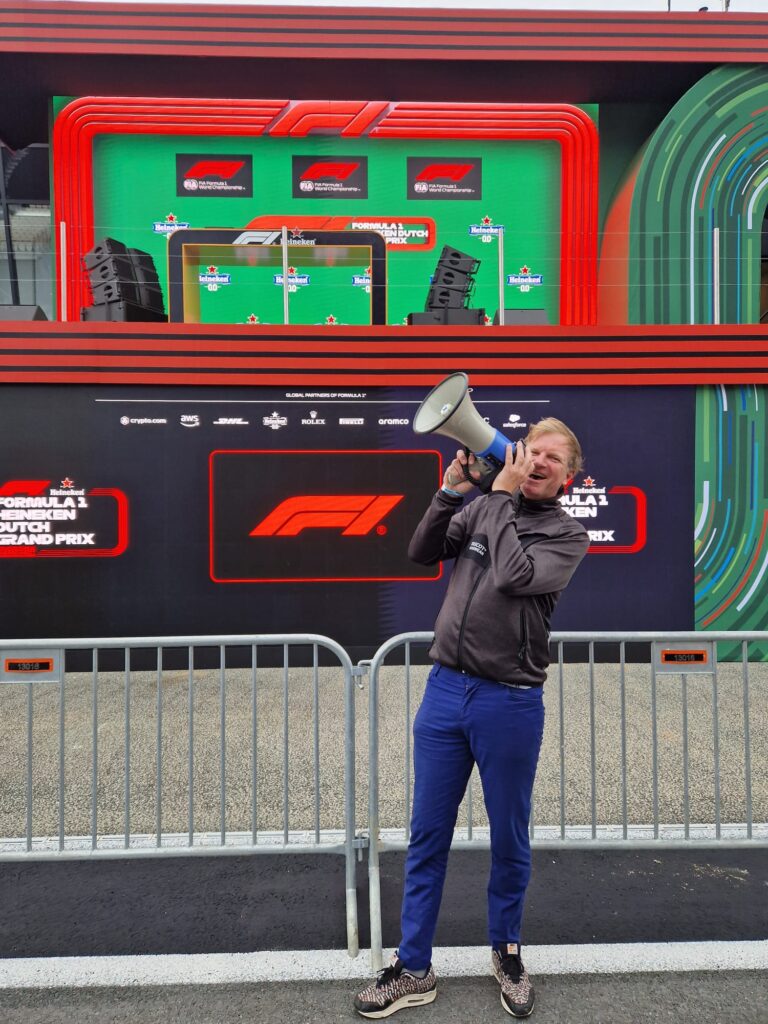
Eelco Groen boasts more than 25 years of experience in the sports industry.
I think it comes down to a combination of several factors.
In the Netherlands, we often refer to the “VOC mentality,” referencing the historic Dutch East India Company. We are a small nation, and unlike others, we lack vast natural resources like oil or gold. Consequently, we have historically had to find alternative ways to generate economic growth and drive our economy.
I believe one of our greatest strengths is strategic planning capability. We place tremendous value on thorough organization. There are countless Dutch professionals who excel in event operations. Generally speaking, we strive to be elite at whatever we set our minds to, and I believe we consciously decided that sports would be one of those domains.
I’m not sure if “innovation” is the exact right word. Rather, I would say we are always searching for new ways to expand our economy, and the sports and event management industry is a key vehicle for that. In delivering major events, I think we particularly stand out because of our approach to planning.
When working on international competitions, I frequently observe operational teams taking immediate action, frantically moving around, without spending adequate time establishing a clear strategic roadmap.
“For me, the top priority is developing a comprehensive playbook: a rock solid operational strategy with structured timelines and milestones.”
That is why I emphasize that this success isn’t driven by innovation alone. Naturally, the Netherlands innovates within sports, but beyond that, there is a deeply ingrained culture of striving to optimize every process, taking that extra step to advance the sector and contribute to national economic growth.
You have contributed to events like Formula 1, the UEFA EURO, and other major championships. What does it take to deliver an exceptional fan experience?
Today, the most critical factor is designing the holistic fan journey.
It is no longer enough for fans to simply show up at a venue to watch a game, a race, or a match. While the core competition remains the primary draw, organizers must recognize that fans are committing significant time and financial resources to live an overall experience. That experience begins long before they take their seats.
In fact, it starts the moment they approach the venue perimeter.
For example, on projects I work on in the Netherlands, both in Formula 1 and previously during the European Championship, we are responsible for welcoming fans during the “last mile” before they enter the circuit or stadium.
Some fans arrive by bicycle, others by bus, train, car, or on foot. The question we must ask ourselves is: how do we ensure a positive experience from their very first touchpoint with our organization?
Ultimately, it comes down to understanding who the fan is and mapping their touchpoints. It merges event operations with hospitality management, not just within the venue, but across the entire pre event lifecycle.
In Formula 1, for instance, we use a dedicated mobile app to communicate practical details to attendees before they arrive: pointing out high congestion zones, warning of hot weather so they pack sufficient water, or clarifying prohibited items.
“It isn’t solely about the main event; it’s about the end to end journey from the moment they leave home until they return. Even post event, you can maintain engagement by sending a thank you message, a highlight recap, or other targeted content that extends the experience.”
Looking ahead, what key trends do you expect to have the greatest impact on the sports industry?
There are several major trends emerging, but from an operational perspective, the primary driver circles back to what we discussed earlier: the evolution of the fan experience.
“Modern sports fans no longer want to be passive spectators. Younger generations expect much more. They demand interactive experiences, direct engagement with franchises and properties, and a genuine sense of community. They don’t just want to watch; they want to participate.”
That requires establishing two way communication channels, maintaining continuous touchpoints, and delivering hyper personalized experiences. It also means providing greater operational flexibility. For instance, season ticket holders increasingly find it difficult to attend every single home game. As a result, properties must provide seamless platforms for fans to transfer or reassign their tickets.
Furthermore, fans expect direct interaction. If a fan has a birthday, why not send a personalized video greeting from their favorite player? Those targeted activations build much stronger brand equity and emotional connection.
Another major trend centers on emerging sports entertainment formats. While this isn’t my direct operational focus, I find it fascinating.
In the Netherlands, speed skating is a dominant sport, even if it doesn’t hold a massive global footprint. However, dynamic disciplines like short track speed skating are gaining tremendous traction.
We are also seeing rapid growth in agile, fast paced event formats. In Spain, you have property concepts like the Kings League or the Ballers League, spearheaded by Gerard Piqué, featuring seven a side football formats built entirely around fan-centric entertainment.
A similar shift is happening in the Netherlands with King of the Court, a two on two beach volleyball format where five teams continuously rotate throughout the match. It offers a fast paced, highly engaging spectator product.
We see this shift taking place at the Olympic level as well. Traditional disciplines are relinquishing prime broadcast slots, while dynamic sports like sport climbing, particularly bouldering and foiling are securing expanded profiles.
I believe this reflects a broader shift in content consumption habits. Whether we like it or not, that is the current market reality. High tempo formats are gaining market share, and sports organizations must adapt to this new media landscape.
“The most significant shift is that athletes are transforming into standalone media platforms.”
Traditionally, franchises and clubs held the monopoly on brand equity and fan engagement. Today, individual athletes are building powerful personal brands.
Cristiano Ronaldo is perhaps the ultimate case study, but he is far from the only one. Consider the Cape Verde national team goalkeeper during the World Cup, who gained millions of followers off a few spectacular saves. Suddenly, his social media reach eclipsed that of many top tier clubs he might play for.
When an athlete commands an audience of that scale, they effectively operate as an independent enterprise. They can generate substantial revenue streams through personal sponsorships, commercial partnerships, and branded content.
As a result, athlete empowerment and leverage are growing significantly, reshaping their relationships with clubs and property rights holders alike.