The sports industry no longer revolves solely around competition. Today, it also encompasses entertainment, technology, content, business, social impact, and digital transformation. From organizations like FIFA to leagues like the NBA or historic clubs like FC Barcelona, the sector increasingly demands highly specialized professionals
In this context, many people ask the same question: what career opportunities exist in sport management, and what kind of education should you choose based on your profile?
There’s no single answer. Within the sports industry, very different areas coexist: marketing, sponsorship, event and facility management, strategy, communications, commercial operations, and finance. That’s why choosing the right path isn’t just an academic decision—it directly shapes your professional positioning and the opportunities you’ll be able to build in the industry.
The sports industry: a constantly evolving sector
The sports industry is undergoing a major transformation. In its 2026 Global Sports Industry Outlook, Deloitte highlights trends such as the integration of artificial intelligence, the growth of sports venues, and the intersection with new media.
This means opportunities will continue to grow, but organizations will also demand professionals who can adapt to a constantly changing environment.
Broadly speaking, sport management is the discipline responsible for planning, organizing, and directing human, material, and financial resources within the sports sector. Sport managers lead operations in clubs, facilities, federations, events, and companies tied to the industry. Their work combines administrative and financial management, team leadership, strategic planning, and decision-making.
In reality, though, sport management goes far beyond a single role. It includes areas such as marketing, sponsorship, facility management, event organization, strategy, communications, commercial operations, and financial management. And career opportunities aren’t limited to clubs or federations—there are also roles in sport tourism, major international events, startups, consulting, and sport innovation.
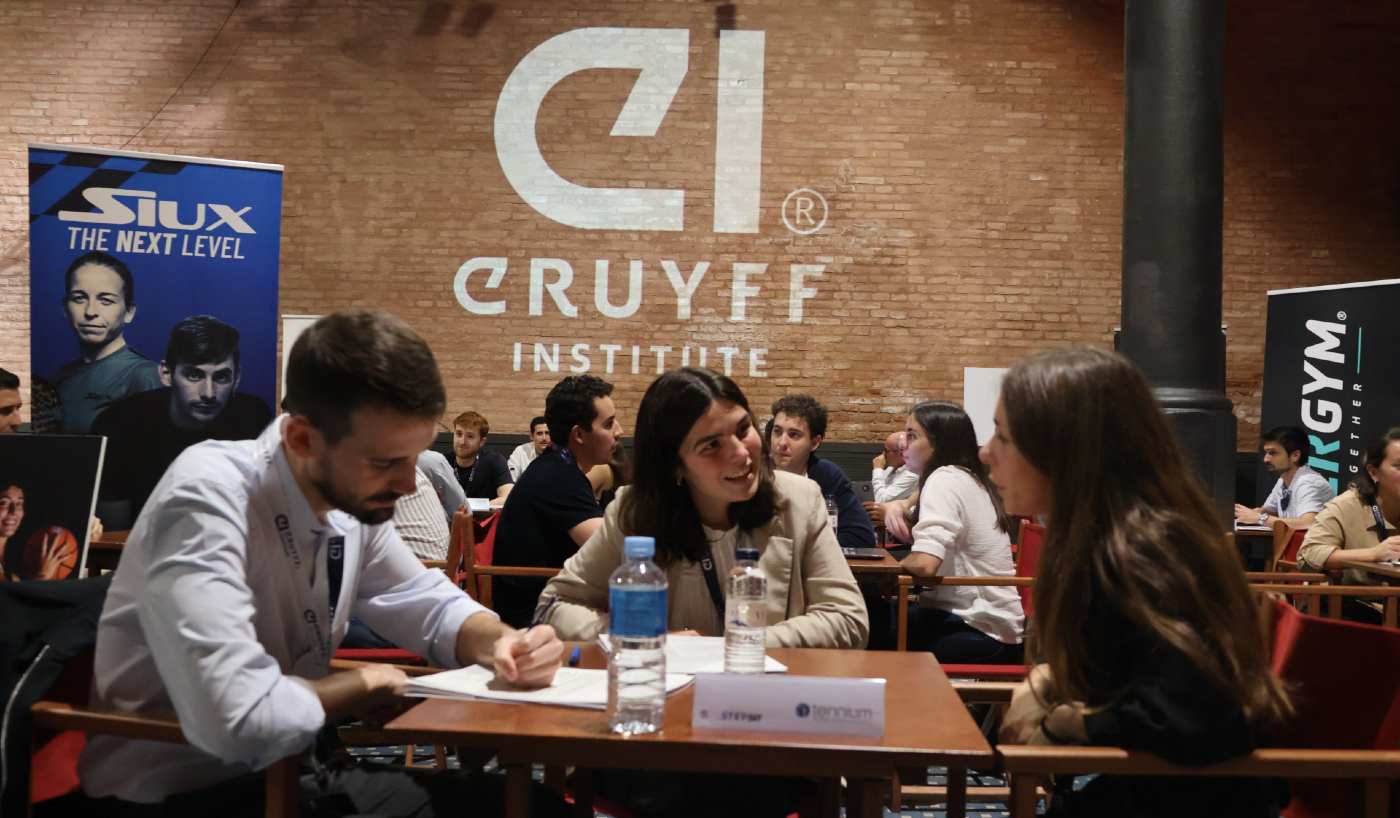
During the Sports Business Job Fair, students from Johan Cruyff Institute had the opportunity to meet with industry professionals.
What kind of profiles the sports industry is looking for today
Each of these areas aligns with different profiles, skills, interests, and backgrounds. That’s why, before choosing a specialization or degree, it’s important to identify which profile fits you best.
If you’re creative and communication-driven
Sport marketing and sponsorship are usually the most natural fit. These areas are closely tied to brand development, content creation, fan engagement, branding, media, and consumer behavior analysis. They’re a strong match for people coming from communications, advertising, journalism, branding, or digital marketing who want to specialize in sports.
Here you can explore the story of Mariana Palao, a Johan Cruyff Institute alumna who works as Strategic Commercial Partnerships Lead and Sport Marketing Coordinator at Gobik.
If you’re organized and operations-focused
Facility management and event management require a practical mindset, planning skills, team coordination, process control, and the ability to handle unexpected issues.
These specializations are very hands-on, focused on day-to-day operations, user experience, and optimizing physical and logistical resources. They’re a good fit for people who enjoy organizing, executing, and making sure everything runs smoothly.
Carolina Mariani is a former elite athlete who now works as Technical Coordinator at ENARD, supporting the development of young athletes
If you’re analytical and finance-oriented
Financial management and sport economics are becoming increasingly important in a sector where economic sustainability is now a priority.
Budgeting, cost control, revenue analysis, investment evaluation, project profitability, and financial fair play are key competencies here. This path is especially suited to people with strong analytical skills, a business mindset, and comfort working with data.
Vitor Casquinha, from Portugal, completed an internship at Kings League during the University Master’s Degree in Sports Management Barcelona and later secured a role there as a Commercial Analyst.
If you’re strategic and leadership-oriented
Strategic management and sport governance are geared toward those aiming for leadership roles. This involves long-term vision, data-driven decision-making, organizational design, regulation, institutional ethics, and the ability to align people, resources, and objectives.
Here you can learn about Tom Pedersen-Smith, a Johan Cruyff Institute alumnus who works as Director of Strategy and Development at EuroHockey.
How to choose a sport management specialization based on your profile
Choosing a specialization isn’t just about identifying which area has the most job openings. The key is understanding what aligns with your profile, your previous experience, and the career path you want to build.
- If you’re interested in communication, content, brands, and audience engagement, sport marketing and sponsorship likely make sense.
- If you’re more comfortable in coordination, operations, and organization, facility management or event management may be a better fit.
- If you enjoy working with numbers, analysis, and financial sustainability, financial management and sport economics offers a solid path.
- And if your goal is to move into leadership roles, influence organizational direction, and take part in high-level decision-making, strategy and governance may be the right direction.
In every case, specialization creates more value when it reflects a coherent professional choice.

Sports industry professionals must be prepared for the challenges of an ever-evolving industry.
What kind of sport management education fits you best
In an increasingly professionalized sector, the difference isn’t just getting trained—it’s doing so with a clear direction.
The combination of technical specialization, strategic thinking, and the ability to adapt to technology is becoming essential to advance in the sports industry. So it’s not just about studying sport management, but choosing a program aligned with the area you want to grow in.
Programs like those offered by Johan Cruyff Institute are designed to match different professional profiles and career stages. They combine theoretical knowledge, strategic perspective, and hands-on experience, enriched by direct interaction with faculty, peers, and industry organizations.
- The University Master’s Degree in Sports Management Barcelona provides a broad understanding of how modern sports organizations operate, while also diving deeper into areas like event management, facility management, and sponsorship.
- The Master in Sport Business and Marketing Blended Barcelona is geared toward those looking to build a career in marketing, commercial management, branding, or brand activation within the sports ecosystem.
- For those focused specifically on football, the Master in Football Business in partnership with FC Barcelona centers on managing and leading within the soccer industry using a globally recognized model.
These programs are available on-campus, blended, or online, and are complemented by postgraduate courses, specialized diplomas, and short programs in areas like sponsorship, sustainability in sports, financial management, data analytics, and fan engagement.
Choosing well today to build your profile tomorrow
The sports industry needs increasingly specialized professionals, but also people who understand the sector as a whole.
Choosing a specialization in sport management isn’t just about following trends or chasing a specific job. It’s about identifying where you can add the most value, what skills you need to develop, and what kind of education will help you turn that into a solid career path.
The clearer you are about the professional profile you want to build, the easier it will be to make smart educational decisions and position yourself effectively within the sports industry.
FAQs
What is sport management and what areas does it include?
A sport management master’s can fit a wide range of profiles, as long as there’s a genuine interest in building a career in the sports industry.
It’s often a good option for business professionals looking to specialize in sports, former athletes transitioning into management, students seeking focused specialization, and industry professionals aiming to update and strengthen their skills.
What profiles fit a master’s in sport management?
Anyone aiming to work in the management of sport organizations or companies is a strong fit for a master’s in sport management. Participants typically include professionals looking to enter the industry or advance within it. Common profiles include:
- Business professionals seeking to specialize in the sports industry
- (Former) athletes looking to gain formal education and credentials in sport management
- Students aiming to complement their education with a specialized master’s degree
- Industry professionals with experience but no formal training in sport management who want to structure and update their knowledge
What are the key skills and competencies in sport management?
Sport management requires a mix of strategic thinking, organizational ability, and knowledge of the sports ecosystem.
Key skills include planning, team leadership, decision-making, resource management, analytical thinking, adaptability, and identifying new opportunities.
In such a dynamic environment, it’s also essential to combine an understanding of sports culture with strong business judgment.
What’s the difference between sport management and the business of sport?
While often used interchangeably, they’re not exactly the same.
Sports management focuses on running and organizing entities, resources, and projects within sports. The business of sports focuses more on the economic and commercial side—how value is created, how assets are monetized, and how growth opportunities are developed.
The main difference lies in the focus: management is about running organizations and projects; the business of sports is about their economic and strategic logic.
What career paths are most common depending on your background?
Career opportunities depend largely on your background, experience, and chosen specialization.
Some common roles include:
- Customer Success Manager
- Head of Innovation
- Partnerships Manager
- Chief Financial Officer
- Digital Strategy Manager
- Brand Manager (Digital Activations)
- Director of Commercial Services
Specialized education helps expand your options and makes it easier to access higher-responsibility roles within the industry.